


TL;DR: Neither aluminum nor vinyl is the best choice for every privacy screen. Consider how much of the view you want to block, how much airflow you prefer, and how the specific product handles sun, moisture, and maintenance. Before privacy screen installation, compare actual panel designs and product specifications rather than relying on the material name alone.
A screen beside a Hampstead deck may need to block a neighbor’s window while keeping the rest of the view open. A screen beside a seating area may require more coverage. Decide what you want the screen to accomplish before choosing a material.
Start with the view you want to block
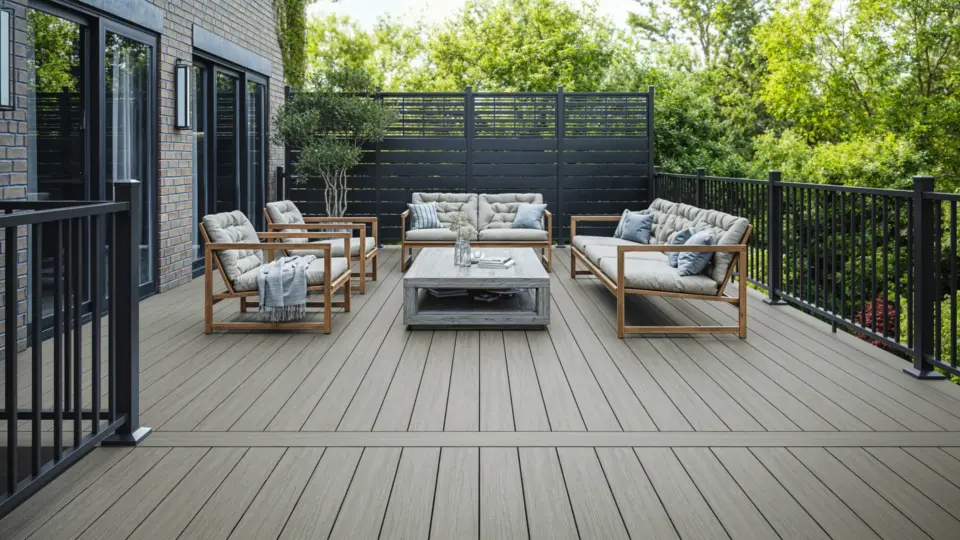
Privacy depends on the panel design, height, and placement, not simply on whether you choose aluminum or vinyl. Tightly spaced panels can block more of the view, while open patterns allow more airflow and daylight. Check the screen from both seated and standing positions to see where the sight line begins and ends.
Do you need a short screen beside a table or coverage along a longer edge? A full enclosure can make a small deck feel boxed in. In some yards, a partial screen near the seating area provides enough privacy while preserving the view across the lawn. Discuss how much coverage you need before planning privacy screen installation around the entire perimeter.
How do aluminum and vinyl look?
Aluminum screens may have slim frames or patterned panels, depending on the product. Vinyl screens can have a smooth, solid appearance or a slatted design. Neither material has one standard look. Compare actual samples beside your house, railing, and outdoor furniture in both daylight and shade.
Consider color as well as shape. A dark frame may stand out against light siding, while a light panel may draw attention beside a dark deck. Choose a design that also looks good from inside the house, since that may be the view you see most often.
Aluminum can support slim framing and decorative panel designs, making it worth considering when you want privacy without a bulky appearance. Vinyl panels often provide a more traditional look, with solid and slatted styles available depending on the product. Aluminum finishes may offer a wider range of contemporary appearances, while vinyl can suit homeowners who prefer a simple, uniform design. Compare specific products rather than assuming every screen made from the same material looks alike.
What does coastal exposure change?
Hampstead’s coastal conditions make moisture, salt exposure, sunlight, and wind important considerations. Aluminum resists rust but can experience corrosion or finish deterioration, particularly if protective coatings or hardware are damaged. Vinyl does not corrode like metal, although prolonged sunlight can contribute to fading or discoloration, depending on the product. Both materials benefit from regular cleaning, and their long-term performance depends on product quality, installation, and exposure.
Before privacy screen installation, ask the manufacturer for guidance on weather exposure, cleaning, and panel limitations. Solid and slatted designs may have different wind requirements, so do not assume that two panels made from the same material will perform alike.
Compare the full scope, not just a panel price
For privacy screen installation, the panel price is only part of the total cost. Size, design, support, placement, and site preparation also matter. Ask whether the proposal includes your chosen material and finish. Compare complete project costs rather than a panel-only price against a finished installation.
Before arranging privacy screen installation, confirm who will check property boundaries and applicable requirements. Ask how the screen’s placement may affect access to doors, stairs, and areas that need maintenance. If the screen will sit near equipment, account for the access and clearance that equipment requires.
Review the product warranty and construction-work terms separately. Check the coverage, exclusions, and claim process. If the documents are unavailable, do not assume either material includes a particular warranty.
Which material fits your priorities?
Aluminum may appeal to homeowners who prefer slim frames, decorative patterns, and a contemporary appearance. Vinyl may be worth considering if you prefer a more traditional style or a uniform panel design. Both materials can offer different levels of privacy depending on the panel configuration. Compare their finishes, maintenance requirements, wind ratings, and total installed costs before deciding which option best suits your Hampstead property.
To discuss your privacy screen installation options, call Deck and Patio TuneUp at (910) 742-1620. The team can help you compare designs, consider the coverage you need, and choose an option that suits your outdoor space.